Every so often a record arrives that feels less like a new release and more like a letter finally delivered after decades in a drawer. That is exactly the spirit of the latest from Nimbus, who this month complete one of the most quietly moving archive projects in recent memory. Shura Cherkassky, the Ukrainian-born pianist so many of us grew up admiring, is back in the catalogue with a fourth and final volume of recordings nobody had heard until now.
A five-year treasure hunt ends
The story behind these discs is irresistible. During the 2020 shutdowns, with studio diaries empty, the label went digging through its own shelves. So, do we have anything unissued we could use? That casual question, as the booklet notes recall, turned into a proper investigation. What they found ran to more than fifty recording projects that, for one reason or another, had never been released.
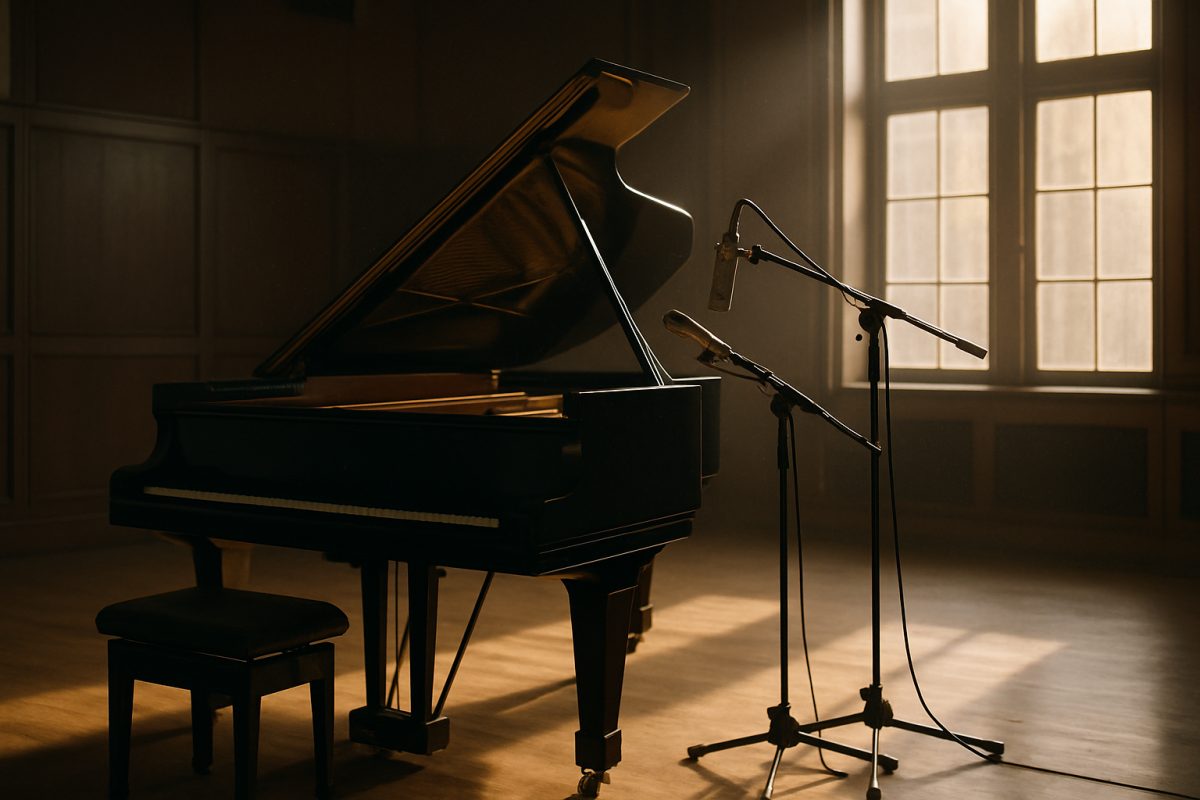
Cherkassky was one of the artists at the heart of this trove. He was introduced to Nimbus by Wilfred Stiff, then a director of the London agency Ibbs and Tillett, who sent one of his starriest names to the label at the very moment the industry was shifting from LP to CD. The sessions took place at Wyastone Leys in Monmouth, and the new volume gathers material recorded between 1982 and 1987, all of it previously unreleased.
Why this one matters
Set for release on 2 October 2026, this is the final rediscovered volume in the series, and it saves some genuine gold for last. Reviewing the preceding instalment, MusicWeb International flagged what was still to come: Beethoven's Appassionata and Liszt's monumental Tannhauser Overture transcription are promised in the final volume, and based on the previous recital it should be well worth the wait.
That pairing tells you a lot about the pianist. The Appassionata is a summit of the Classical sonata, all structural fury and control, while Liszt's Tannhauser Overture transcription is an outrageous feat of imagination that asks a single pair of hands to conjure a full Wagnerian orchestra. Few pianists could hold both in the same frame. Cherkassky, famously, could.
The last great Romantic
For those coming to him fresh, it helps to know what made Cherkassky special. He is remembered almost universally as the last great Romantic pianist, combining a sensitivity of touch with the power of a modern player. He was unpredictable in the best sense, able to pull a Chopin rubato like taffy one moment and play with absolute discipline the next. His career was astonishing in its length too. His performing career lasted over 70 years, yet only in its final decades was he widely recognised as one of the greatest, a self-declared intuitive artist. He kept working almost to the very end, dying in London in December 1995.
Why archive releases like this stay with me
As a pianist, I find there is something humbling about hearing a great musician in the privacy of a studio, decades on, with no audience to please and nothing to prove. These are not polished calling cards. They are documents of a mind at work. Listening back, you catch the small risks, the unexpected voicing, the sense of a player following an instinct rather than a plan. That is the part of our art that no competition result or press photo can capture, and it is the part I love most.
It also reminds me why live performance matters so much. A recording preserves a moment, but the moment itself only ever happens once, in a room, between player and listener. If you enjoy that kind of intimacy, whether in the Romantic repertoire Cherkassky championed or in chamber music built on real conversation between musicians, I would warmly invite you to explore my upcoming concerts or to get in touch about booking a recital.
Where to start
If you are new to Cherkassky, this final volume is a fine entry point precisely because of its scale and ambition. Put the Appassionata on first, then let the Liszt sweep you off your feet. Then, if you are anything like me, you will find yourself going back to Volumes 1 through 3 and the broader Nimbus legacy, grateful that a quiet question in an empty studio brought all of this back into the light.