Every so often a new recording lands that makes me want to sit down at the keyboard and rethink what the instrument can do. This month it is Manu Sinistra, the debut concerto album from the young Ukrainian pianist Illia Ovcharenko, which has been gathering an impressive run of reviews across the European press in the past couple of weeks. As a pianist who spends a great deal of time thinking about how the hands share the work of music, I found the premise irresistible.
A programme built around one hand
The concept is beautifully simple and quietly audacious. Ovcharenko, with the MDR-Sinfonieorchester under Oksana Lyniv, presents three concertos written for the left hand alone, by Sergei Bortkiewicz, Maurice Ravel and Sergei Prokofiev. All three were written for the pianist Paul Wittgenstein, who lost his right arm in the First World War and responded by commissioning new music.
What I love about this pairing is the range of answers to a single question. The album travels from the sweeping Romanticism of Bortkiewicz's Second Concerto to the sharply defined and seldom-heard Fourth Concerto by Prokofiev, with Ravel's dark, masterfully constructed Concerto for the Left Hand at the centre.
Why the left hand is harder than it looks
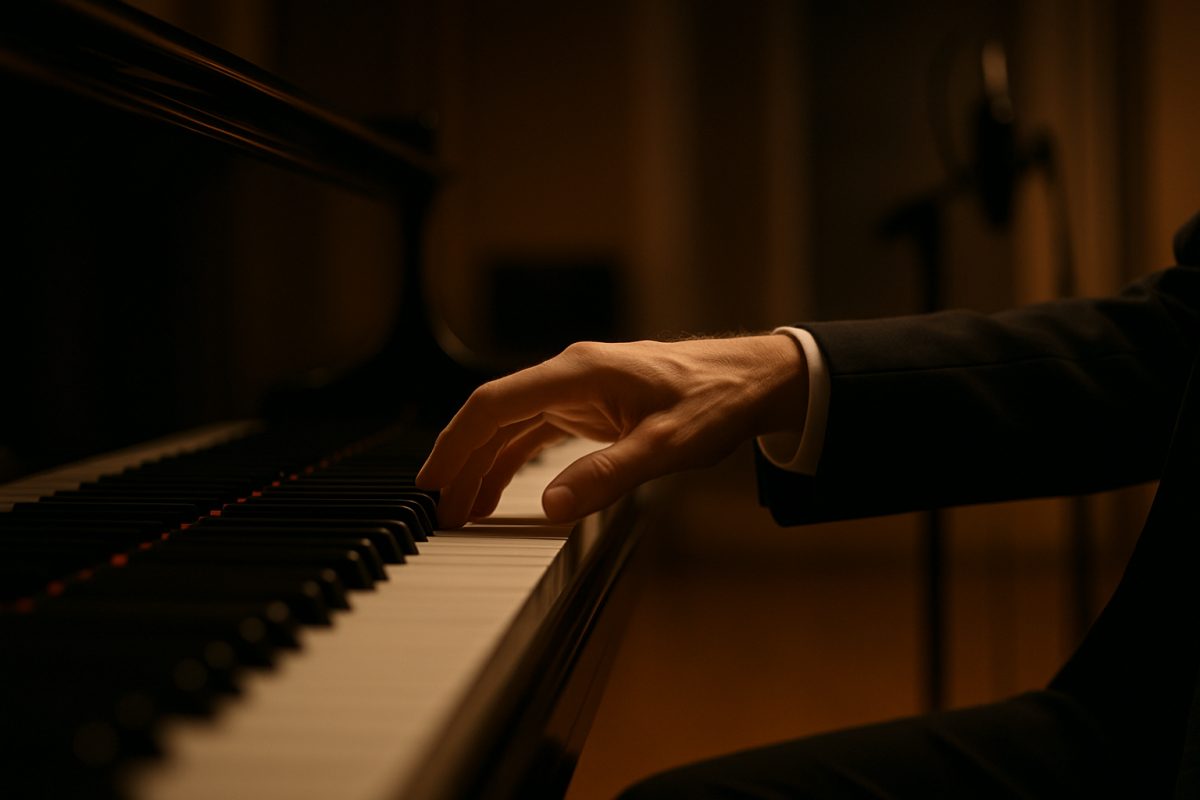
Ask any pianist and they will tell you that the left hand carries an enormous share of a keyboard texture: bass, harmony, inner voices, often melody too. Writing a whole concerto for it means conjuring the illusion of two hands from five fingers. The best of these scores make you forget the constraint entirely. Pianist Magazine noted that Bortkiewicz's solo part is full of sleights of hand that leave listeners wondering whether it really involves only five fingers, and singled out its long, opulent slow movement for particular praise.
A wave of acclaim
The chorus of approval has been striking. Germany's PIANIST magazine awarded the album a rating of nine out of ten, with critic Stephan Schwarz-Peters describing a recording where every element aligns. BBC Music Magazine gave four stars, with Jessica Duchen calling it an enterprising listen that is always beautifully performed. Gramophone's Peter J Rabinowitz praised playing of unusual dexterity, colour and force of character.
Critics keep returning to the least familiar work on the disc. International Piano described Bortkiewicz's Second Concerto as a less familiar but enjoyable addition to the left-hand repertoire, while the German review called Ovcharenko's account one of the finest new recordings of the work. That, to me, is the real service of an album like this: it rescues a fine piece from the margins and gives it a proper hearing.
Ovcharenko's rise
The pianist is no newcomer to serious attention. Ovcharenko won the 2022 Honens International Piano Competition, and for this Pentatone debut he essentially subtracts something: his right hand. It is a bold way to introduce yourself on record, and the results suggest real artistic courage rather than mere novelty.
A pianist's postscript
Recordings like this remind me why I keep coming back to the physical mystery of playing: how touch, voicing and pacing can persuade an ear that a single hand is a whole orchestra of fingers. It is exactly the kind of thinking I bring to my own recitals and chamber programmes, where balance between the hands and between players is everything.
If this repertoire draws you in, I would gently encourage you to hear it live wherever you can, and I warmly invite you to explore my upcoming concerts or to get in touch about booking a recital. There is nothing quite like sitting in the same room as a piano being coaxed to sing.