Every pianist has a relationship with the instrument that is oddly one-sided. We give it hours of our lives, we curse it, we adore it, and yet most of us know very little about the people who actually built the thing sitting in our practice rooms. A new book from one of Britain's most respected piano writers sets out to change that, and I have been thinking about it ever since I first heard about it.
A different kind of piano book
There are shelves of books about the composers who wrote for the piano. There are far fewer about the makers. Jeremy Nicholas's The Great Piano Makers does something less common, offering a chronological survey that runs from Cristofori in the 1690s all the way to Fazioli, the youngest of the great names.
Nicholas is well placed to write it. A longtime critic for Gramophone and International Piano, he is regarded as one of the UK's leading authorities on the piano and pianists, and a specialist in Leopold Godowsky in particular. That authority shows in the ambition of the project.
More than a hundred stories
The scope is genuinely wide. The book gathers the stories of more than 100 makers, from familiar giants such as Steinway, Bechstein and Yamaha to once-famous brands like Chickering, Collard & Collard and Forster, alongside firms that faded away entirely, and pioneers such as Henri Pape and Sebastien Erard. Reading that list of names, I felt a small pang. So many of these builders shaped how music actually sounds, and yet how often do we say their names aloud?
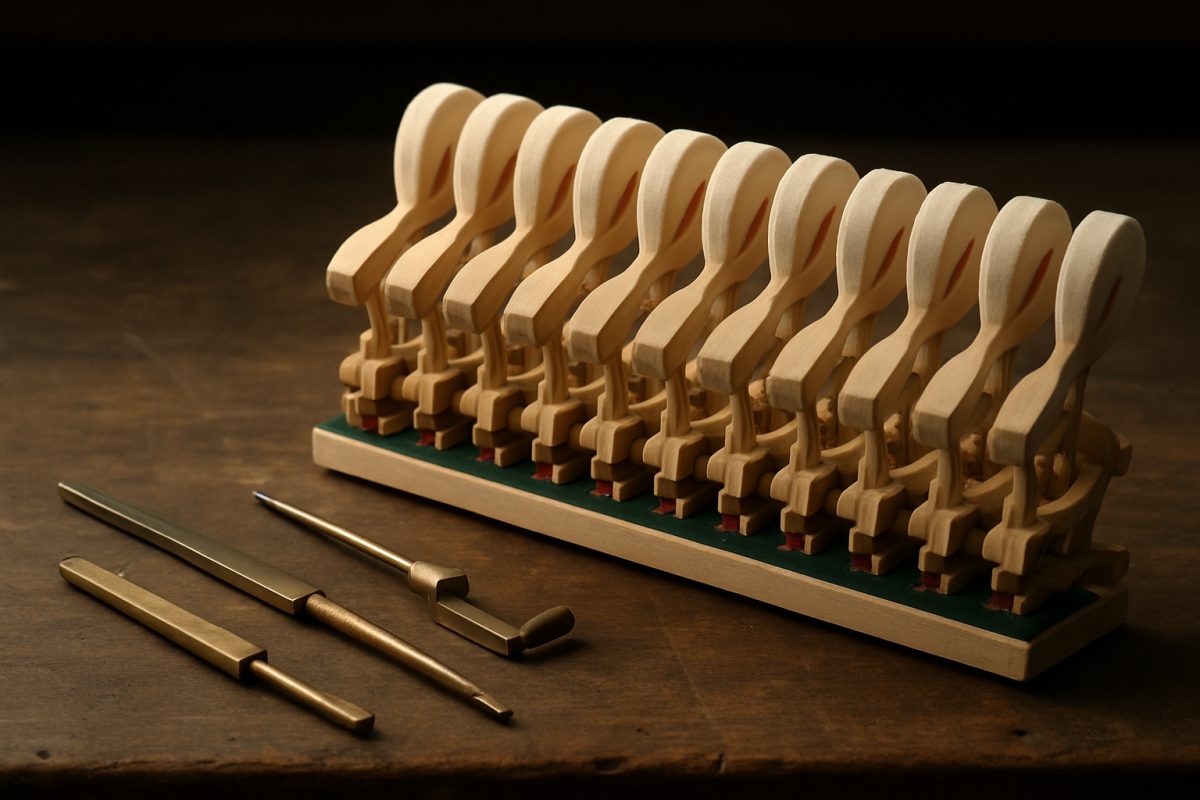
According to Gramophone's review, the appeal lies partly in the telling. Nicholas writes with a light touch but without losing detail, and has a knack for describing technical innovations and different piano actions in a way that stays genuinely engaging even for readers who are not mechanically minded. That last point matters. Piano mechanics can read like an engineering manual, and most of us switch off. A writer who can make the escapement feel like a story is doing something valuable.
Why the makers matter to players
When I sit down at an unfamiliar instrument before a recital, the first few minutes are a conversation. How does the action respond? Where does the tone open up, and where does it resist? Every one of those answers is the result of decisions made by builders, sometimes centuries ago. The warm, singing quality some of us chase, the clarity others prefer, these are not accidents. They are the fingerprints of makers who each had a philosophy about what a piano should be.
Nicholas places this craft in a long tradition. The review notes that a fascination with piano building goes back more than a century, to Alfred Dolge's Pianos and their Makers of 1911 and many books since. What Nicholas adds is a single, readable sweep across the whole story rather than a study of one firm or one city.
A quiet reminder for concertgoers
There is something moving about the idea that a maker who died a hundred years ago is still, in a sense, present every time we play. That thought sits close to how I approach my own concerts. Chamber music and recital work are collaborations, and the instrument is one of the partners in the room. When I program a piece, I am also thinking about which piano will let it breathe.
If this article leaves you curious about the craft behind the keys, I would gently encourage two things. First, seek out Nicholas's book, because it is the kind of read that will change how you listen at your next concert. Second, come and hear that craft in action. You can explore my upcoming recitals and chamber programs, or enquire about booking a performance, at yinghopiano.com.
We spend so long talking about who wrote the music and who plays it. It is a fine thing, for once, to honor the hands that built the instrument in the first place.