
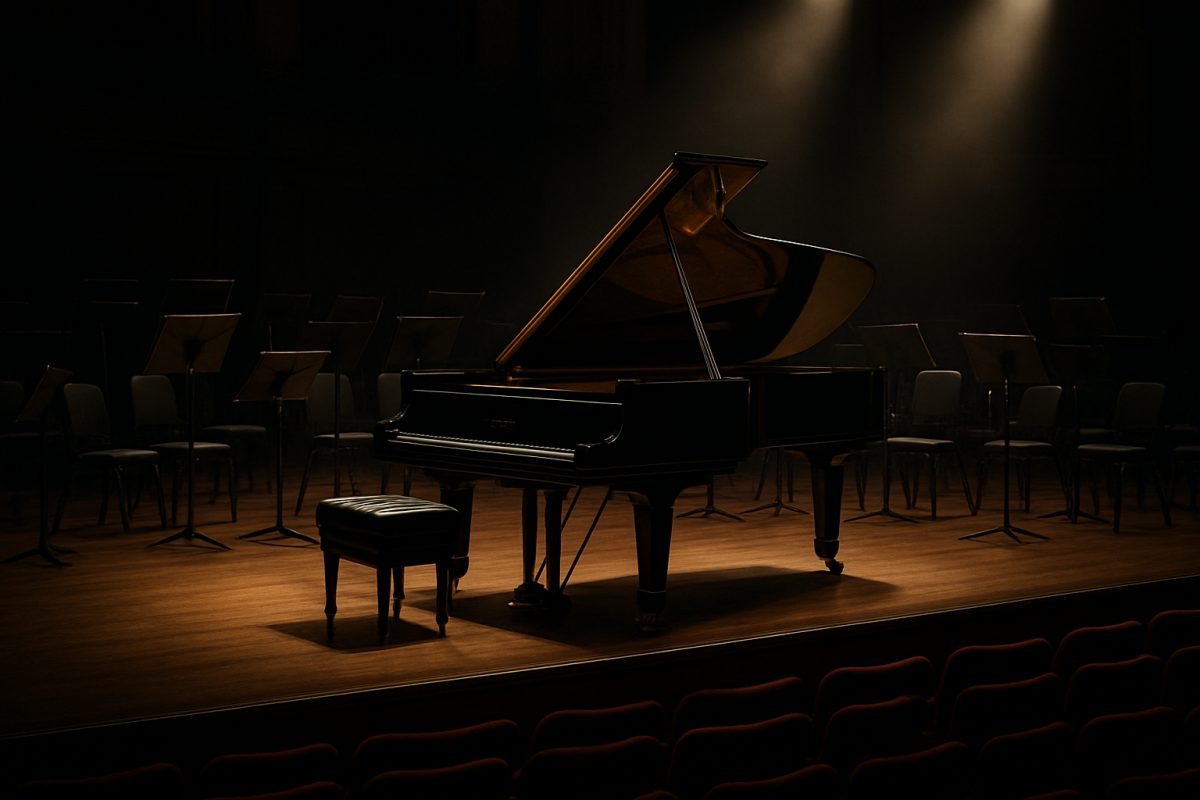
There are competitions, and then there are institutions. The Franz Liszt International Piano Competition in Hungary belongs firmly to the second category, and its 2026 edition has just drawn to a close in the city of Pecs. As a pianist who spends a good deal of her life inside Liszt's world, I always watch these results with a mixture of curiosity and quiet nerves on the young players' behalf.
A competition with deep roots
This is not a new arrival on the scene. Dating back to 1933, the first Liszt Competition was held under the direction of Erno Dohnanyi and won by the legendary Annie Fischer, a name that still carries enormous weight among pianists. That single fact tells you almost everything about the lineage a competitor steps into here. You are not merely playing for a jury; you are joining a conversation that began nearly a century ago.
The 2026 rounds unfolded at the Kodaly Centre in Pecs. The competition ran from 15 to 20 September 2026, with the final rounds staged across 18 to 20 September, and this year the event coincided with organiser Filharmonia Hungary marking seven decades of concert life in the city.
The jury and the journey to the final
The panel this year was a genuinely starry one. The 2026 jury was chaired by Olga Kern and also included Janos Balazs, Gergely Boganyi, Barry Douglas, Jan Jiracek von Arnim, Lei Meng and Gyorgy Vashegyi. For young pianists, playing in front of names like these is an education in itself, quite apart from any medal.
The structure asked a great deal. The first round featured twelve competitors in a programme that also paid tribute to the 100th anniversary of composer Gyorgy Kurtag through selected pieces from his Jatekok, or Games. That is a lovely touch. Kurtag's miniatures are deceptively simple on the page and merciless in performance, exposing every choice a pianist makes about touch and silence.
The great works of the final
From there the demands only grew. The semi-final challenged six pianists with Liszt's grand transcriptions, paraphrases and original masterworks such as the Hungarian Rhapsodies, before three pianists advanced to the grand final performing Liszt's Sonata in B minor alongside one of his great concert works, either the First or Second Piano Concerto or the Totentanz. In the orchestra final on 20 September, the finalists performed with the Hungarian National Philharmonic Orchestra under conductor Gyorgy Vashegyi.
The B minor Sonata is, to my mind, one of the hardest single works to bring off in any competition. It is a half hour of sustained architecture where the smallest lapse in pacing can collapse the whole span. To follow it with a concerto in front of a full orchestra is a test of stamina as much as artistry.
Why these results matter beyond Hungary
The prizes are substantial. The first prize carried a cash award of 35,000 euros, with 18,000 euros for second place and 9,000 euros for third, plus a separate audience prize. Money aside, what a competition like this really offers is a launch pad, and the presence of an audience prize is a reminder that public warmth counts too.
What strikes me most is the repertoire discipline. A Liszt competition forces its entrants to live inside one composer's imagination for a week, and that intensity tends to reveal who has genuine interpretive instinct rather than merely fast fingers. Liszt asks for grandeur and intimacy in the same breath, and the finalists who thrive are usually the ones who understand that the quiet moments matter as much as the octaves.
Bringing Liszt home to the recital room
This is exactly the terrain I love exploring in my own concerts, from the singing lines of the late pieces to the sweep of the Sonata. If reading about Pecs has stirred your appetite for Liszt played live, I would warmly invite you to look through my upcoming recital dates or to get in touch about a performance. There is nothing quite like hearing this music in a room, where the silences land and the big moments truly ring.
Congratulations to every pianist who walked onto that stage in Pecs. Whatever the placings, a week spent this deep in Liszt changes a musician for good.