Every so often a piece of news reaches me that has nothing to do with the big-money galas or the household-name virtuosos, and yet it makes me smile more than any of them. The close of the Ettlingen International Piano Competition in Germany is one of those. This August, the competition reached a real landmark, and I wanted to share why it matters to anyone who cares about where the next generation of pianists comes from.
A milestone edition in a small German town
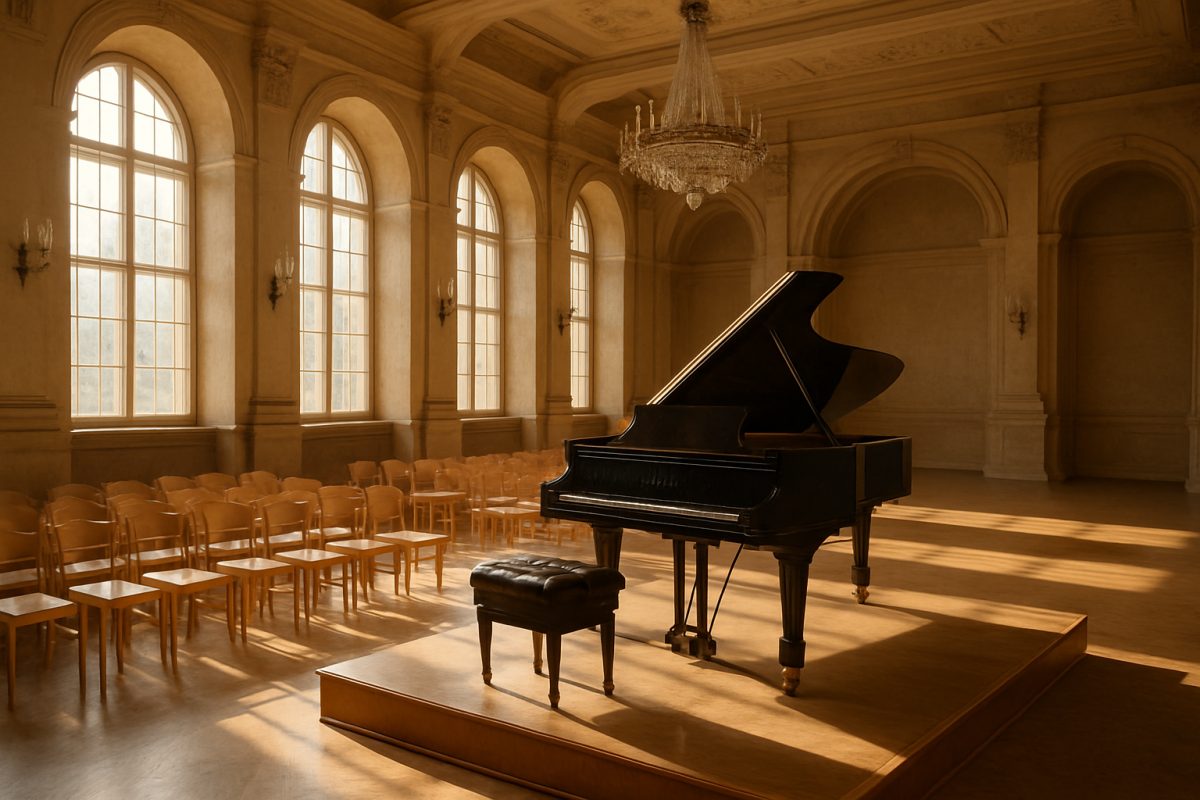
The competition ran in Ettlingen, near Karlsruhe, and closed with its Prizewinner's Concert in the town hall. Organisers confirmed that the celebration took place on a Sunday morning, where the ten main prizes and special prizes worth around 20,000 euros were awarded during the Prizewinner's Concert in Ettlingen Town Hall on 9 August 2026.
What strikes me about Ettlingen is its scale. This is not a stadium event. It is a town that has quietly built one of Europe's most respected platforms for young players, and it has now done so twenty times.
Built for young players, judged on artistry alone
The structure tells you everything about the competition's priorities. It splits entrants into two age brackets: Category A for the youngest competitors and Category B for the older group, with the divide set by birth date rather than by any measure of prior fame or schooling. There are, refreshingly, no restrictions on musical education, so a student from a small private studio can sit alongside a conservatoire prodigy on equal terms.
The pre-jury process is anonymous too. According to the competition rules, the panel screens recorded applications without knowing a candidate's name or nationality, which is exactly the kind of blind fairness I wish more contests would adopt. And every stage is open to the public, so the whole town gets to listen in.
Why competitions like this matter
As a performer, I have complicated feelings about competitions. Music is not a sport, and a jury cannot really rank a phrase of Schubert. But an event like Ettlingen does something valuable that has little to do with winning. It gives a young player a deadline, a real audience, a proper stage, and the experience of preparing a serious programme under pressure. Those are the things that turn a talented student into a musician.
The prizes here are meaningful without being distorting. In the older category, the first prize is set at 6,000 euros, with a graded scale of awards below it. That is enough to matter to a young artist, but the competition's real currency is exposure and momentum. A first-prize winner in the senior group is typically invited back to give a recital, which for many is the first taste of a professional engagement.
A quiet European tradition worth watching
Ettlingen sits in that valuable middle ground between the school eisteddfod and the career-making international contest. Names that pass through here are worth following, because a strong showing in a town like this is often the first line on a biography that later fills concert halls.
It reminds me of my own path and of the countless young players I meet who are hungry for a real platform. Chamber music and the recital stage remain, to my mind, where a pianist truly grows, and it is heartening to see a competition that keeps the focus on repertoire and musicianship rather than spectacle.
If reading about the next generation makes you want to hear live piano again, I would love to welcome you to one of my own concerts. You can explore upcoming dates and enquire about bookings at yinghopiano.com, whether for a solo recital or an intimate chamber programme. There is nothing quite like being in the room when the music happens.